
Bachelor Of Science In Computer Science

INTRODUCTION
I Prof. Dr. Lal Khan, welcome you on the behalf of Faculty, student and staff of Department of Computer Science.
It is a pleasure and honor for me to introduce the “Department of Computer Science” at IBADAT International University, Pakpattan Campus. aim of the department is to follow excellence in Computer Science through teaching and research. Our department have vigorous, self-motivated and groundbreaking scholars and researchers. Our faculty is highly qualified in all areas of CS. Department of Science is devoted to delivering the highest level of quality in teaching, research, and community engagements as we endeavor to improve the insightful and optimistic impact of computer science on our world in the future. Department offer our students the best hands-on experience, intellectual collaboration, research prospects , social impact projects andindustry linkages so that they get the best of placements and also contribute to societal growth.
We as a team aim to take the department to peaks of success and glory and prepare for the impending challenges.
Dr. Lal Khan
Faculty of Computer Sciences

Lal Khan
Associate Professor
Faculty of Computer Sciences

Syed Zeeshan Mehmood Shah
Lecturer
Faculty of Computer Sciences
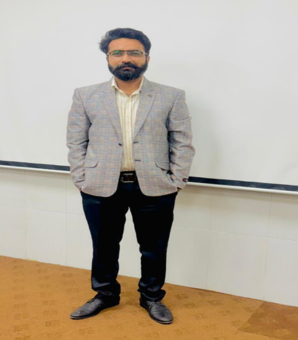
Shahzaib
Lecturer
Faculty of Computer Sciences
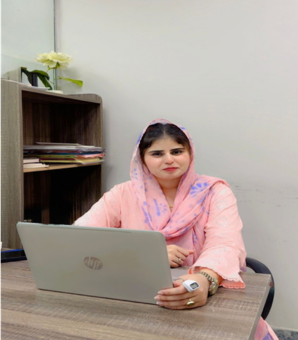
Asima Manzoor
Lecturer
Faculty of Computer Sciences

Muhammad Rashid
Lecturer
Faculty of Computer Sciences

Waheed Shehzad
Lecturer
Faculty of Computer Sciences
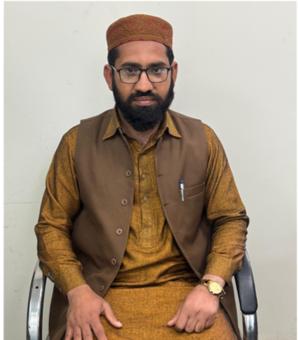
Hafiz M.Ibrahim
Lecturer
Faculty of Computer Sciences
Program Duration: 4 Year
Timing: Morning (Monday-Friday)
Recognized By: Higher Education Commission,NCEAC
Entry Requirements: 12 Years of Education, Intermediate, FA/F.Sc (Pre-Engineering, Pre-Medical)/ICS/I.Com, A-Levels, DAE or equivalent (minimum 50% marks). Candidates having FSc with minimum 50% marks are also eligible for admission but according to National Computing Education Accreditation Council (NCEAC) of HEC such students must pass deficiency courses of Mathematics of 6 credit hours within one year.
IBADAT International University Entry test / NAT
BSCS Scheme of Study
| Code | Course Title | Cr Hrs |
|---|---|---|
| Semester I (Total Cr Hrs: 17 (14-3)) | ||
| BCS-6101 | Programming Fundamentals | 4 (3-1) |
| BCS-6601 | Application of Information & Communication Technologies | 3 (2-1) |
| BCS-6607 | Ideology and Constitution of Pakistan | 2 (2-0) |
| BCS-6609 | Applied Physics | 3 (2-1) |
| BCS-6602 | Functional English | 3 (3-0) |
| BCS-6608 | Introduction to Management | 2 (2-0) |
| BCS-6001 | Mathematics-I | 3 (3-0) |
| Semester II (Total Cr Hrs: 18 (15-3)) | ||
| BCS-6102 | Object Oriented Programming | 4 (3-1) |
| BCS-6604 | Discrete Structures | 3 (3-0) |
| BCS-6104 | Digital Logic Design | 3 (2-1) |
| BCS-6606 | Islamic Studies / Ethics | 2 (2-0) |
| BCS-6403 | Probability & Statistics | 3 (3-0) |
| BCS-6611 | Civics and Community Engagement | 2 (2-0) |
| BCS-6115 | Seerat-un-Nabi (Peace Be Upon Him) | 0 (0-0) |
| BCS-6614 | Understanding of Holy Quran-I / Critical Reading and Writing-I | 1 (0-1) |
| BCS-6002 | Mathematics-II | 3 (3-0) |
| Semester III (Total Cr Hrs: 19 (16-3)) | ||
| BCS-6105 | Data Structures | 4 (3-1) |
| BCS-6610 | Professional Practices | 2 (2-0) |
| BCS-6605 | Calculus and Analytic Geometry | 3 (3-0) |
| BCS-6110 | Computer Organization & Assembly Language | 3 (2-1) |
| BCS-6603 | Expository Writing | 3 (3-0) |
| BCS-6109 | Software Engineering | 3 (3-0) |
| BCS-6615 | Understanding of Holy Quran-II / Critical Reading and Writing-II | 1 (0-1) |
| Semester IV (Total Cr Hrs: 19 (16-3)) | ||
| BCS-6112 | Analysis of Algorithms | 3 (3-0) |
| BCS-6108 | Computer Networks | 3 (2-1) |
| BCS-6203 | Human Computer Interaction & Computer Graphics | 3 (2-1) |
| BCS-6107 | Artificial Intelligence | 3 (2-1) |
| BCS-6404 | Technical & Business Writing | 3 (3-0) |
| BCS-6612 | Entrepreneurship | 2 (2-0) |
| BCS-6613 | Pakistan Studies | 2 (2-0) |
| Semester V (Total Cr Hrs: 19 (15-4)) | ||
| BCS-6206 | Parallel & Distributed Computing | 3 (2-1) |
| BCS-6201 | Theory of Automata | 3 (3-0) |
| BCS-6103 | Database Systems | 4 (3-1) |
| XXX-#### | Domain Elective 1 | 3 (2-1) |
| BCS-6111 | Operating Systems | 3 (2-1) |
| BCS-6402 | Linear Algebra | 3 (3-0) |
| Semester VI (Total Cr Hrs: 18 (14-4)) | ||
| BCS-6205 | Compiler Construction | 3 (2-1) |
| BCS-6106 | Information Security | 3 (2-1) |
| XXX-#### | Domain Elective 2 | 3 (2-1) |
| BCS-6204 | Computer Architecture | 3 (2-1) |
| BCS-6501 | Introduction to Marketing | 3 (3-0) |
| BCS-6401 | Multivariable Calculus | 3 (3-0) |
| Semester VII (Total Cr Hrs: 14 (6-8)) | ||
| BCS-6113 | Final Year Project – I | 2 (0-2) |
| XXX-#### | Domain Elective 3 | 3 (2-1) |
| BCS-6202 | Advance Database Management Systems | 3 (2-1) |
| XXX-#### | Domain Elective 4 | 3 (2-1) |
| BCS-6701 | Field Experience / Internship | 3 (0-3) |
| Semester VIII (Total Cr Hrs: 13 (6-7)) | ||
| BCS-6114 | Final Year Project – II | 4 (0-4) |
| XXX-#### | Domain Elective 5 | 3 (2-1) |
| XXX-#### | Domain Elective 6 | 3 (2-1) |
| XXX-#### | Domain Elective 7 | 3 (2-1) |
Elective Courses (Each 3 Credit Hours – 3(2-1))
| Code | Course Title | Cr Hrs |
|---|---|---|
| BCS-6301 | Web Technologies | 3 (2-1) |
| BCS-6302 | Mobile Application Development | 3 (2-1) |
| BCS-6303 | Advanced Programming (Old Name: Visual Programming) | 3 (2-1) |
| BCS-6304 | Numerical Analysis | 3 (2-1) |
| BCS-6305 | Web Engineering | 3 (2-1) |
| BCS-6306 | Cyber Security | 3 (2-1) |
| BCS-6307 | Software Testing & Quality Assurance | 3 (2-1) |
| BCS-6308 | Cloud Computing | 3 (2-1) |
| BCS-6309 | Computer Graphics | 3 (2-1) |
| BCS-6310 | Object Oriented Analysis & Design | 3 (2-1) |
| BCS-6311 | Digital Image Processing & Analysis | 3 (2-1) |
| BCS-6312 | Data Mining | 3 (2-1) |
| BCS-6313 | Computer Vision | 3 (2-1) |
| BCS-6314 | Natural Language Processing | 3 (2-1) |
| BCS-6315 | Deep Learning | 3 (2-1) |
| BCS-6316 | Big Data Analytics | 3 (2-1) |
| BCS-6317 | Data Warehousing & Business Intelligence | 3 (2-1) |
| BCS-6318 | Distributed Database Systems | 3 (2-1) |
| BCS-6319 | Database Application Design | 3 (2-1) |
| BCS-6320 | Information Management | 3 (2-1) |
| BCS-6321 | Internet of Things | 3 (2-1) |
| BCS-6322 | Network Security | 3 (2-1) |
| BCS-6323 | Internet Architecture & Protocol | 3 (2-1) |
| BCS-6324 | Wireless Networks | 3 (2-1) |
| BCS-6325 | Data Visualization | 3 (2-1) |
| BCS-6326 | Software Project Management | 3 (2-1) |
| BCS-6327 | Bioinformatics | 3 (2-1) |
| BCS-6328 | Agent Based Software Engineering | 3 (2-1) |
| BCS-6329 | Data Science | 3 (2-1) |
| BCS-6330 | Matrix Theory | 3 (2-1) |
| BCS-6331 | Machine Learning | 3 (2-1) |
| BCS-6332 | Artificial Neural Network & Machine Learning | 3 (2-1) |
| BCS-6333 | Swarm Analysis | 3 (2-1) |
| BCS-6334 | Digital Signal Processing | 3 (2-1) |
| BCS-6335 | Programming for Artificial Intelligence | 3 (2-1) |
| BCS-6336 | Video Games & Creative Writing | 3 (2-1) |
| BCS-6337 | Speech Processing | 3 (2-1) |
MISSION STATEMENT
The mission of the Bachelor of Computer Science is “to provide quality education and equip students with critical thinking, research and transferable skills that prepare socially and ethically responsible computer science graduates committed to professional development and growth”.
CAREER PROSPECTUS
PROGRAM EDUCATIONAL OBJECTIVES (PEOS)
The Program Educational Objectives of Computer Sciences are:
PEO-1 Contribute competently in the computing industry by applying requisite technical skills.
PEO-2 Demonstrate advancement in computing profession by enhancing their knowledge and skills.
PEO-3 Demonstrate ethical values and contribute positively towards the society
PROGRAM LEARNING OUTCOMES (PLOS)
These Program Learning outcomes (PLOs) are the learning outcomes, which will be inculcated to the students to equip their knowledge, skills, and ethics as enlisted below:
PLO-1➤Academic Education: Completion of an accredited program of study designed to prepare graduates as computing professionals.
PLO-2➤Knowledge for Solving Computing Problems: Apply knowledge of computing fundamentals, knowledge of a computing specialization, and mathematics, science, and domain knowledge appropriate for the computing specialization to the abstraction and conceptualization of computing models from defined problems and requirements
PLO-3➤Problem Analysis: Identify, formulate, research literature, and solve complex computing problems reaching substantiated conclusions using fundamental principles of mathematics, computing sciences, and relevant domain disciplines
PLO-4➤Design/ Development of Solutions: Design and evaluate solutions for complex computing problems, and design and evaluate systems, components, or processes that meet specified needs with appropriate consideration for public health and safety, cultural, societal, and environmental considerations.
PLO-5➤Modern Tool Usage: Create, select, adapt and apply appropriate techniques, resources, and modern computing tools to complex computing activities, with an understanding of the limitations
PLO-6➤Individual and Team Work: Function effectively as an individual and as a member or leader in diverse teams and in multi-disciplinary settings
PLO-7➤Communication: Communicate effectively with the computing community and with society at large about complex computing activities by being able to comprehend and write effective reports, design documentation, make effective presentations, and give and understand clear instructions
PLO-8➤Computing Professionalism and Society: Understand and assess societal, health, safety, legal, and cultural issues within local and global contexts, and the consequential responsibilities relevant to professional computing practice
PLO-9➤Ethics: Understand and commit to professional ethics, responsibilities, and norms of professional computing practice
PLO-10➤Life-long Learning: Recognize the need, and have the ability, to engage in independent learning for continual development as a computing professional.
Mapping PLOs with PEOs
| Program Learning Outcomes (PLOs) | Details | PEO-1 | PEO-2 | PEO-3 |
|---|---|---|---|---|
| PLO-1 | Academic Education | ✓ | ||
| PLO-2 | Knowledge for Solving Computing Problems | ✓ | ||
| PLO-3 | Problem Analysis | ✓ | ||
| PLO-4 | Design / Development of Solutions | ✓ | ||
| PLO-5 | Modern Tool Usage | ✓ | ||
| PLO-6 | Individual and Team Work | ✓ | ||
| PLO-7 | Communication | ✓ | ||
| PLO-8 | Computing Professionalism and Society | ✓ | ||
| PLO-9 | Ethics | |||
| PLO-10 | Life-long Learning | ✓ |
Bachelor Of Science In Computer Science
Department
Computer Sciences
Level
Undergraduate
Semesters
08
Credit
136
Whether you’re just starting your college carrer,transferring from another school, or pursing graduate opportunities,IIUI gives you the tools to you need to transform your world—and shape your future